
Bach, Michelle Yeoh and a Full House: How Wushu's Olympic Debut in Dakar Won Over Its Audience
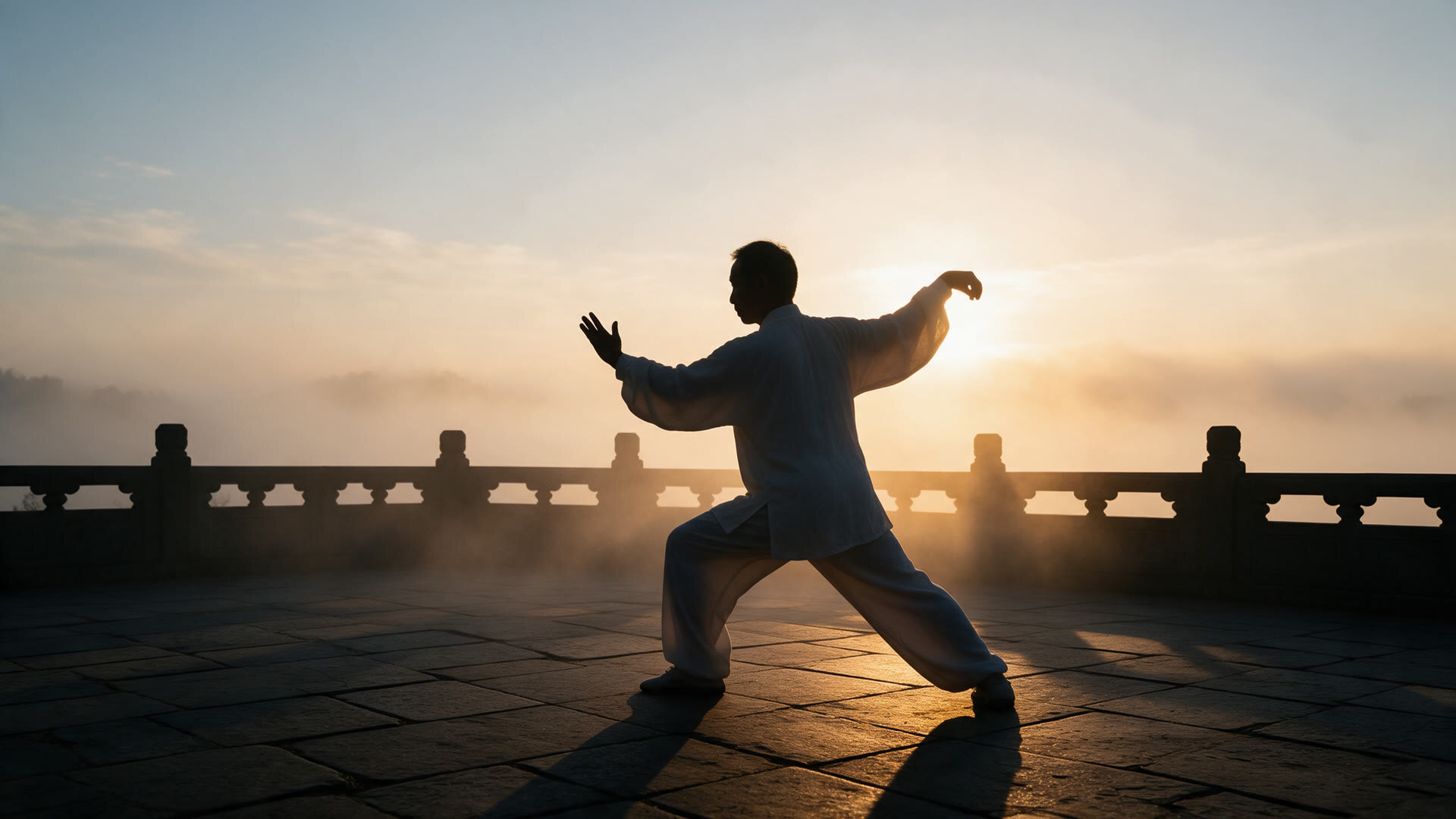
Three days, four gold medals and 47 athletes from 46 countries and regions: wushu's first Olympic medal competition at Dakar 2026 drew IOC leaders, Senegal's president and Michelle Yeoh, and left officials talking about what comes next.
Wushu's first Olympic medal competition has ended at the Dakar 2026 Youth Olympic Games, and the reviews from the Dakar Expo Center (DEX) in Diamniadio are warm. Over three days, from 1 to 3 November, 47 athletes from 46 countries and regions took to the carpet in four events: men's and women's changquan combined and men's and women's taijiquan combined. All four titles were decided on the final day, with gold going to China's Lin Yilei, Egypt's Sondos Sonbol, Hong Kong, China's Poon Hao Ran and Singapore's Ng Zhe Nin.
According to the International Wushu Federation (IWUF), the finals were watched by Senegal's President Bassirou Diomaye Diakhar Faye, China's Minister of Sport Gao Zhidan, IOC Honorary President Thomas Bach, IOC Vice-President Nawal El Moutawakel and IOC members Pierre-Olivier Beckers-Vieujant and Juan Antonio Samaranch. Xinhua reported that IOC member and actress Michelle Yeoh and former NBA star Pau Gasol were also in the stands for the final session, a day after IOC President Kirsty Coventry came to watch the women's changquan preliminaries.
A sport that has outgrown one continent
The theme that kept coming up in the hall was how global the field had become. Speaking to Xinhua, Bach said he was pleased to see wushu on the programme as a full medal sport and pointed out that the athletes came from every continent, whereas for a long time the sport had been concentrated mainly in China. Michelle Yeoh made a similar point, saying the competitors came from different backgrounds and continents and that wushu had grown into an international culture that trains both body and mind.
The scores told the same story. Head judge Lin Xiaohong told Xinhua that the gaps between athletes were small, and that this was exactly what the organisers wanted to see: proof that wushu is not only an Asian sport. The podiums backed that up, with medallists from Indonesia, Iran, Venezuela, India, Vietnam, Japan, Chinese Taipei and Germany alongside the four champions.
Video: USA Wushu-Kungfu Federation / YouTube
A long road to Dakar
For IWUF Secretary General Zhang Yuping, the moment closed a journey of more than two decades. Xinhua recalled that she submitted wushu's application to the IOC for the Beijing 2008 Games in December 2001. Wushu was then held as a separate tournament alongside Beijing 2008 and appeared at Nanjing 2014 in a demonstration format, before the IOC Executive Board added it to the Dakar 2026 programme in January 2020. Zhang compared the final stretch to the last metres of a 400m race, the hardest part of the run. The IWUF now counts 164 member associations.
The coaches who carried the sport abroad were part of the story too. Gao Jiamin, who built a wushu centre in the United States in the 1990s, performed a taijiquan showcase in Dakar, while Zhuo Haojun, sport director of the European Wushu Federation, watched his daughter Mia Zhuo take bronze in the women's taijiquan combined, the only European medal of the competition.
Africa's moment
On home soil, the African Wushu Federation used the Games to send its own message. Its president, Cherif Moustafa, told the opening-day press conference that Africa had spent years training coaches and judges, organising events and supporting its national associations, and that African athletes were now ready not only to take part but to reach the podium. Thirteen athletes from twelve African countries competed in Dakar, and Egypt's Sonbol delivered the continent's first Olympic wushu title.
The athletes themselves enjoyed the stage. Ng Zhe Nin told BBC Sport how she prepared her taijiquan routine to its music: "I keep playing it again and again until I fall asleep." USA's Marshall Brayton said every athlete brings a different flavour to their moves, and that this individuality is the essence of wushu.
With wushu's Youth Olympic chapter complete, the conversation in Dakar has already turned to the next step: keeping the momentum and pushing for a place in the senior Olympic programme.
Sources: IWUF press release, Xinhua, BBC Sport.
Read more on www.news.cn