
The Prodigy's Path: Jet Li's Legendary Wushu Journey

From Poverty to Promise: The Early Years (1963-1971)
Born Li Lianjie on April 26, 1963, in Beijing, China, Jet Li's early life was marked by hardship. When he was only two years old, his father died, leaving his mother to raise five children—three girls and two boys—in poverty. Li was the youngest of the family, growing up in circumstances where meat was a luxury they simply couldn't afford.
Despite these challenging beginnings, young Li possessed extraordinary natural athleticism that would soon change his life's trajectory. At age eight, while attending Chang Qiao Primary School, his physical education teacher noticed something special: the boy's jumping ability, agility, and natural grace were exceptional. This observation would prove to be the turning point that launched one of the most remarkable careers in martial arts history.
Discovery and the Beginning of Training (1971)
In the summer of 1971, eight-year-old Li Lianjie was enrolled in a summer sports program at the Beijing Amateur Sports School (later known as Beijing Sport University). He was randomly assigned to a wushu (martial arts) class—a decision that would change not only his life but the future of martial arts cinema.
It was here that Li met Coach Wu Bin, a man who would become both father figure and mentor. Wu Bin, along with co-coach Li Junfeng, immediately recognized the young boy's exceptional talent. Wu Bin described him as having great coordination and movements that were very graceful, but he also noticed that Li lacked the physical strength necessary for powerful kicking and punching.
Upon visiting the Li family home, Coach Wu discovered the source of the problem: the family didn't eat meat because Li's grandmother had fallen ill and been advised to avoid it, and the family simply continued the practice due to poverty. Understanding that proper nutrition was essential for an athlete's development, Wu Bin took extraordinary measures—he began buying food for Li's family to boost the young athlete's protein intake, ensuring he had the physical foundation to develop his natural talents. 
The Rigorous Path: Full-Time Training (1971-1974)
Li was one of the few students, and the youngest, selected to continue wushu training after that summer program. Coach Wu Bin had higher ambitions for his young prodigy. He designed extra training specifically for Li, pushing him harder than other students. Li attended regular classes during the day and followed an evening curriculum that included leg presses, bending, somersaults, and intensive weapons training. The training was extraordinarily demanding—running around a 350-meter track twenty times in twenty-five minutes for conditioning, mastering all aspects of what was called "old style wushu."
In Jet Li's era, wushu training was comprehensive and exhaustive. Students had to learn all of the Eighteen Arms of wushu, which consisted of: sabre, spear, sword, halberd, axe, battle axe, hook, fork, whip, mace, hammer, talon, trident-halberd, cudgel, long-handled spear, short cudgel, stick, and meteor hammer. Every competitor had to master broadsword, spear, straight sword, cudgel, and empty-hand forms.
Recognizing that Li was ambitious and willing, Wu applied what he called "A resounding drum must be struck with a heavy hammer" approach. Years later, Li understood: his coach did it all for his good, pushing him to heights other students could never reach.
The First Triumphs: Youth Championships (1974)
At age nine (1972), Li won an award for excellence at the first wushu competition held in China since the Cultural Revolution—a historic moment as wushu was slowly being rehabilitated after being considered part of the "Four Olds" and banned during the Cultural Revolution's darkest years. Two years after beginning serious training, at age eleven in 1974, Li captured the title of China's National Youth Wushu Champion. This victory earned him a coveted position on the prestigious Beijing Wushu Team for a world tour—an extraordinary honor for one so young.
As part of the 1974 China national wushu team, Li traveled to the United States. The most memorable moment came when the Chinese National Wushu Team performed for President Richard Nixon at the White House. During this historic meeting, the eleven-year-old Li was asked by President Nixon to become his personal bodyguard. Li's response became legendary: "I don't want to protect any individual. When I grow up, I want to defend my one billion Chinese countrymen!" This patriotic declaration earned him tremendous respect in his homeland.
An Unprecedented Dynasty: Five Consecutive National Championships
At age twelve (by Chinese counting, which adds a year), Li won his first Men's National All-Around Championship title. His winning first place caused quite a sensation because he was so young—only twelve years old, while the other two medalists were in their mid- to late twenties.
1975-1979: An Unbroken Reign
From 1975 to 1979, Jet Li achieved what no competitor has accomplished before or since: he became the All-Around National Wushu Champion of China for five consecutive years. The specific championship years and titles were:
- 1974: Gold Champion of Youth National Athletic Competition
- 1975: Gold Champion of the 3rd China Martial Competition / Men's National All-Around Championship
- 1976: Men's National All-Around Championship
- 1977: Gold Champion of the National Martial Competition / Men's National All-Around Championship
- 1978: Gold Champion of the National Martial Competition / Men's National All-Around Championship
- 1979: Gold Champion of the 4th China Martial Competition / Men's National All-Around Championship
During these years, Li won a total of fifteen gold medals and one silver medal across various events in national championships.
Injury and Retirement from Competition (1979)
At age sixteen, Li's unprecedented championship run came to an end. In 1979, he retired from professional wushu competition after suffering a serious knee injury—he tore his Anterior Cruciate Ligament (ACL) while performing a jump inside kick to split. Li retired from competitive wushu at age eighteen (1981), but his contribution to the sport was far from over.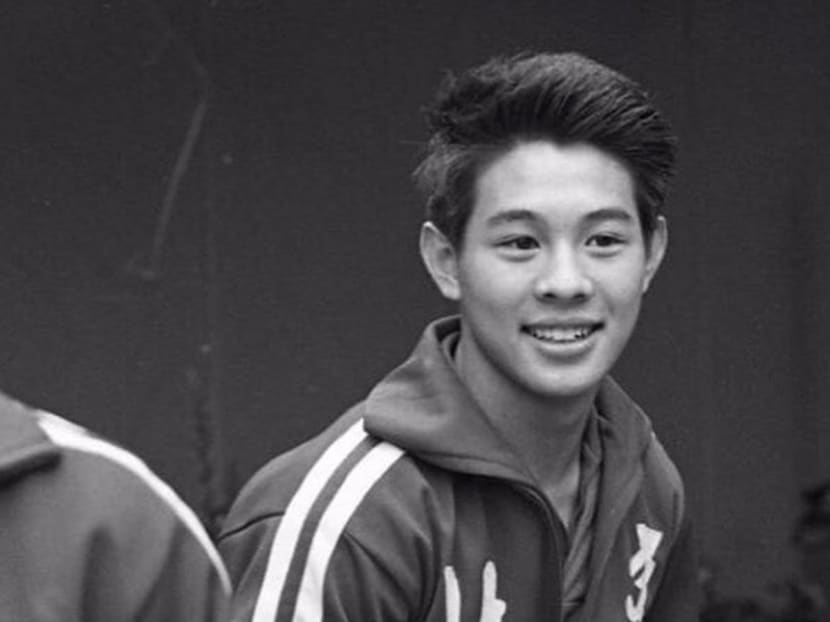
Transition to Coaching (1979-1982)
Following his competitive retirement, Li became an assistant coach of the Beijing Wushu Team—one of the youngest individuals to hold such a position at the national level. For several years, he focused on instructing emerging athletes in forms, weapons, and routines. His coaching tenure, which lasted several years before film commitments intensified, helped institutionalize training protocols that mitigated injury risks through structured progression, ensuring the team's continued success in high-stakes performances.
Legacy and Recognition
Jet Li's competitive wushu career established records that remain unbroken. His five consecutive national all-around championships from 1974 to 1979 represent an achievement no other competitor has matched to this date. The fifteen gold medals and one silver medal he accumulated during his competitive years set a standard of excellence that defined modern wushu.
In 2007, Li was appointed by the Chinese Wushu Association as the "Image Ambassador of Wushu" (or IWUF ambassador) at the World Wushu Championships in Beijing—a fitting recognition of his role in popularizing the sport globally.
In 2023, Li was inducted into the Martial Arts History Museum Hall of Fame, cementing his status as one of the greatest martial artists in history.
The Beijing Wushu Team that Li helped build during its formative years continues to this day, having produced many famous international stars including not only Jet Li, but also Donnie Yen, Hao Zhihua (Patti Li), Huang Qiuyan, Zhang Hongmei, and Wu Jing.