
2,390 Athletes from 237 Teams Open a National Traditional Wushu Open in Guangzhou, from Push Hands to Short Weapons
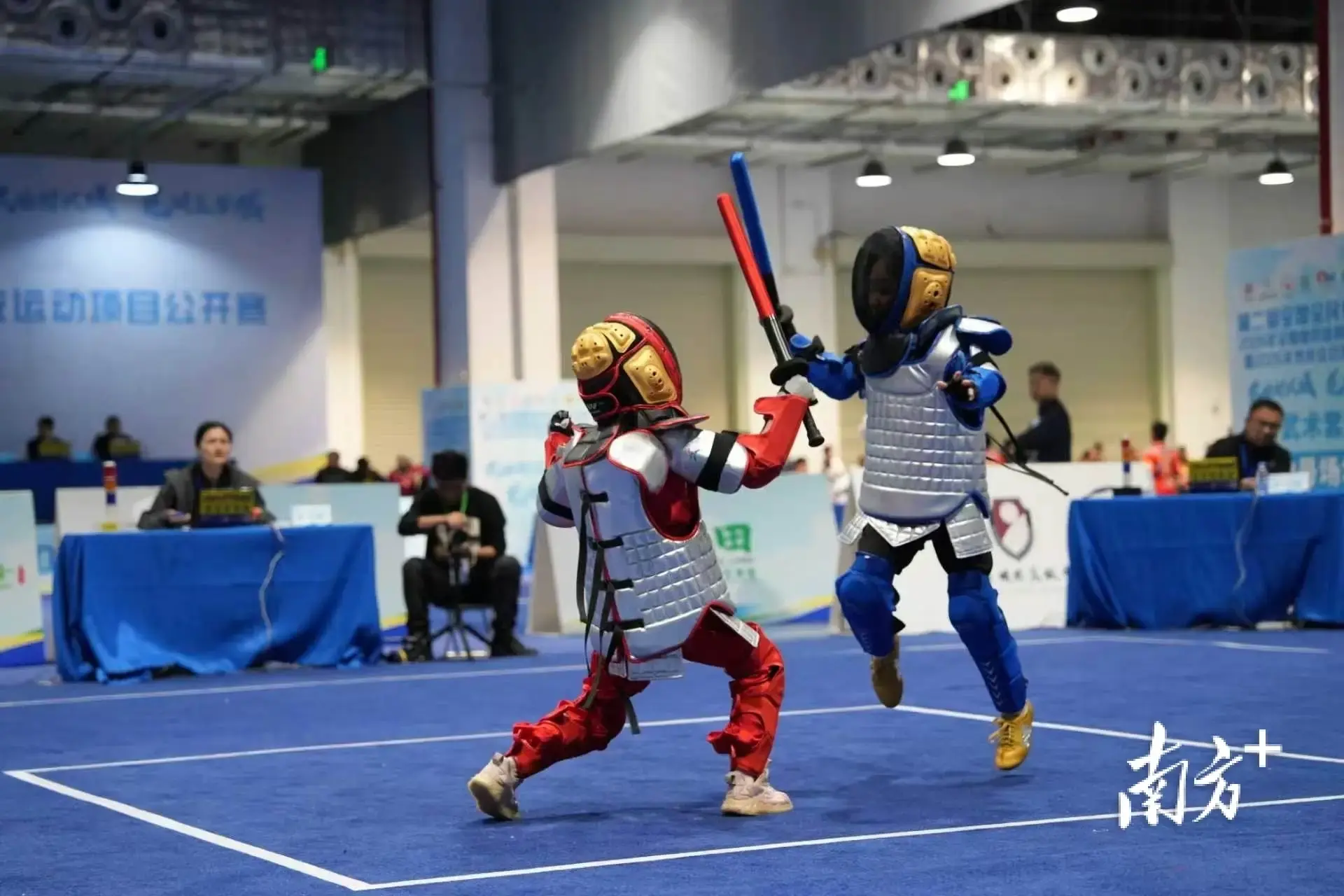
The 2026 Traditional Sports Open, part of China's 2nd National Fitness Games, opened in Guangzhou's Huangpu District on 21 November with 2,390 athletes from 237 teams in traditional routines, taiji push hands and short weapon combat.
One of China's largest grassroots wushu competitions of the year opened on 21 November at the Knowledge City International Convention and Exhibition Center in Guangzhou's Huangpu District. The 2026 Traditional Sports Open, held as part of the 2nd National Fitness Games and a national defense sports programme, drew 237 teams and 2,390 athletes from across the country for three days of competition.
The programme covers traditional wushu routines, group events, taijiquan push hands and short weapon combat (duanbing). Competition runs on two sites, the convention center and the Jingxia Gymnasium, and spans 12 age groups, from children aged 5 and under to athletes over 70. Push hands and short weapons are further split by age and weight class.
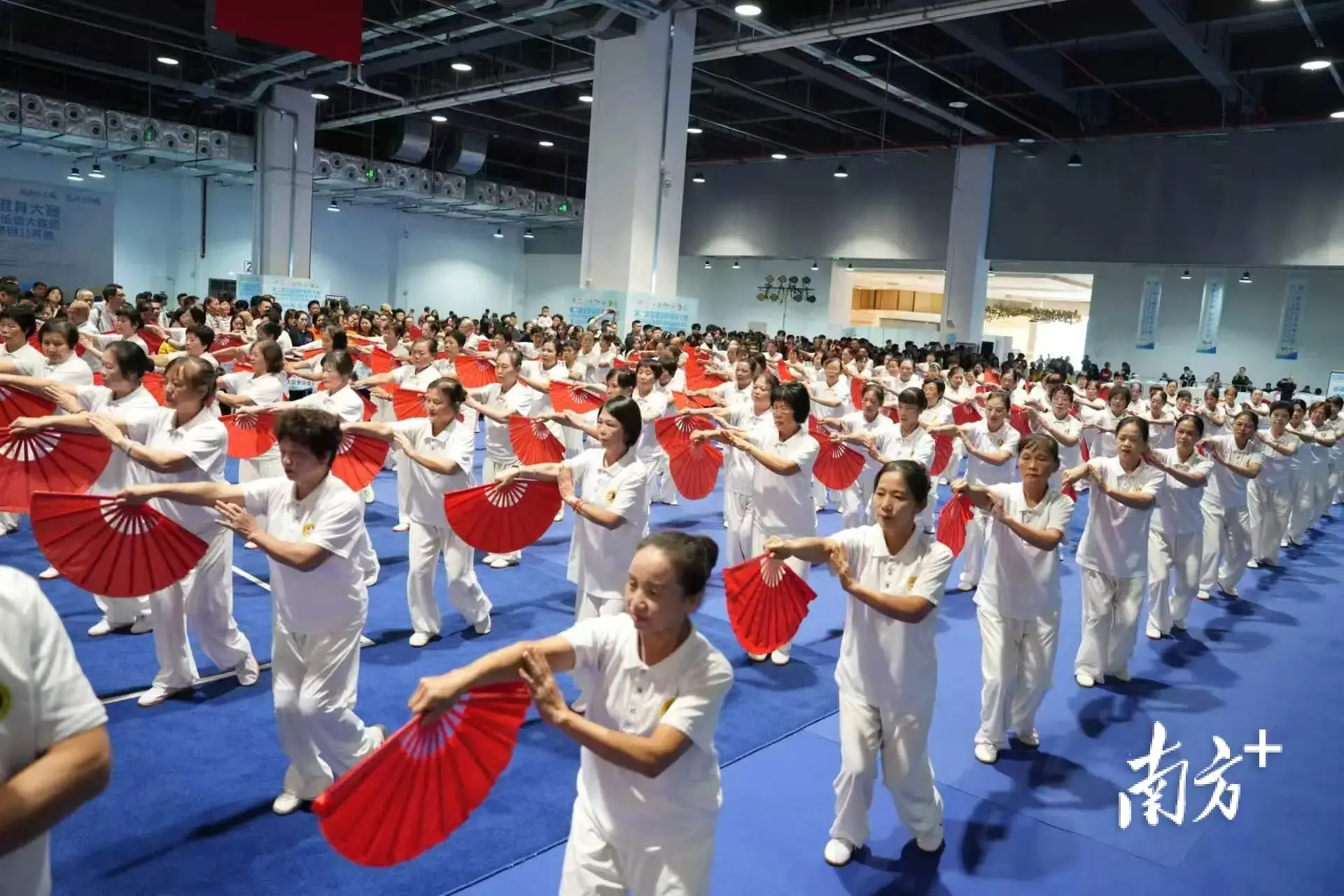
The opening ceremony featured a 100-person taiji fan routine by performers of all ages from 17 community wushu stations in Longhu Subdistrict, an area that already holds a record for the largest taiji fan display. Four young martial artists closed the show: Hung Kuen performer Huang Zijun, whose short videos have passed 100 million views online, the Hung Kuen sisters Huang Xiangru and Huang Xiangyi, and Luo Haoyi, an all-rounder who trains in Hung Kuen, taiji, routines and short weapons.
Huang Mingmin, an expert with the national defense sports expert group of China's General Administration of Sport, said the location in the Greater Bay Area, the venues and strong local participation made Knowledge City a good fit for the event. The Jingxia Gymnasium, which hosts part of the competition, is described by organizers as the only building in Guangdong designed in the shape of a taiji symbol.
Local authorities are pairing the event with rural tourism, giving athletes and ticket holders access to nearby lakes, villages and scenic spots during the three days of competition.
Read more on www.sohu.com